The World Cup is helping to boost consumer spending around the U.S. in June, with host cities seeing notable gains, according to new data from Bank of America.
The Bank of America Institute found that consumer spending using credit and debit cards rose 6.3% from a year ago in June – which was the strongest growth in over four years – based on internal card data from the bank. That growth was largely driven by discretionary spending amid the decline in gas prices, as total card spending was up 5.6% when excluding gasoline.
The firm's analysis noted that the start of the FIFA World Cup 2026 on June 11 helped lift consumer spending for the month compared to the preceding period.
"The World Cup scored big for consumer spending in June," Joe Wadford, an economist at the Bank of America Institute, told FOX Business. "Bank of America card spending showed healthy improvement toward the end of the month, due in part to a lift from the World Cup."
FIFA, WHITE HOUSE MONITORING IMPACT OF CANADA WILDFIRES AHEAD OF WORLD CUP FINAL: SOURCES
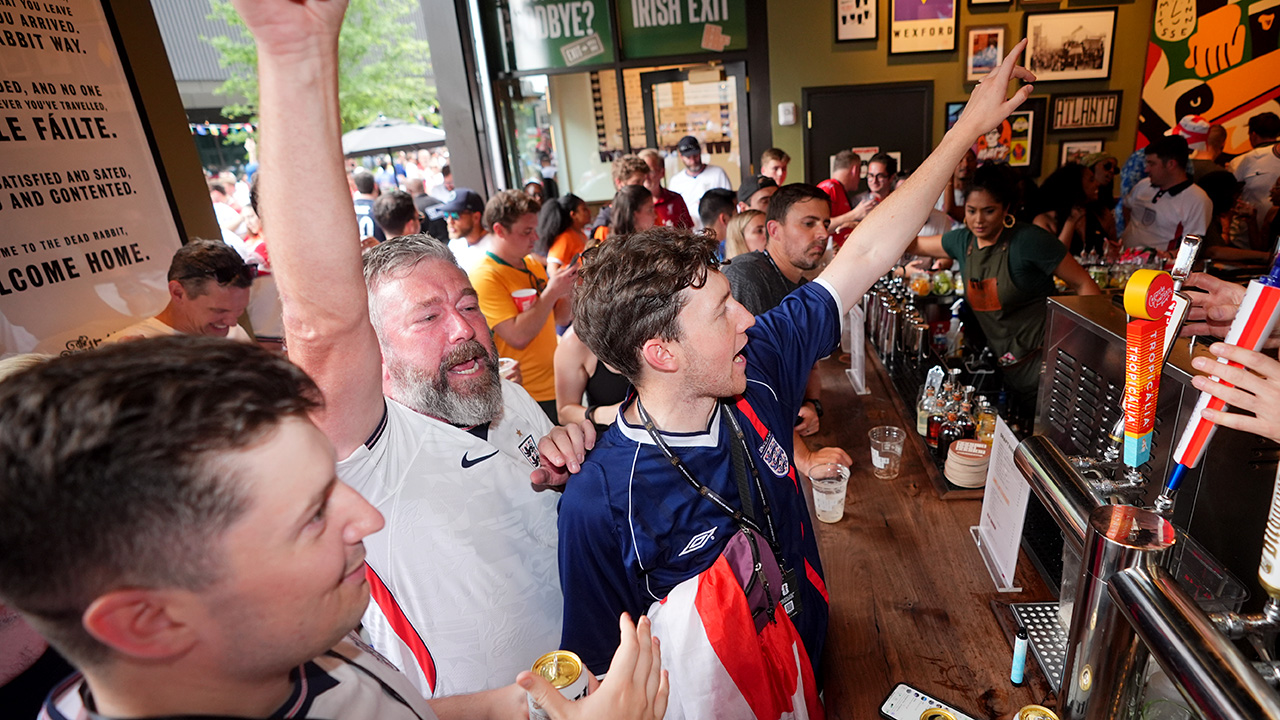
In looking at card spending since the tournament began, the Bank of America Institute data shows higher consumer spending, particularly at restaurants and bars, which may be attributed to the World Cup. Some of the gains are likely due to online promotions near the end of June, but occurred in July last year, and thus boosted the year-over-year comparison, the firm noted.
The analysis compared brick-and-mortar spending in World Cup host cities based on zip codes with spending in other parts of the U.S., finding that some of the surge has been concentrated in communities where games are being played. Restaurants saw consumer spending rise by two percentage points in host cities, while it was flat in all other cities in that period.
"World Cup host cities saw a significant increase in brick and mortar spending, especially compared to the rest of the U.S.," Wadford said.
HOW TO WATCH THE 2026 WORLD CUP FINAL THIS SUNDAY
Retail data that excluded restaurants also showed a gain for stores in host cities after the World Cup began, whereas non-restaurant retailers everywhere else saw slower spending growth once the tournament began.
"From packed stadiums to busy restaurants, the World Cup created a tailwind for the economy. But two of the main beneficiaries of the World Cup were local retailers and restaurants," Wadford said.
"To me, this is a particularly positive story, as it suggests that a major portion of World Cup-generated spending stayed in the community."
A BILLIONAIRE'S BACKING – AND LIFELONG LOVE OF SOCCER – HELPED BRING MAURICIO POCHETTINO TO TEAM USA
The Bank of America Institute analysis also looked at the same internal card data by income level, finding that lower-income households in particular increased spending at local brick-and-mortar businesses in host cities, while higher-income households eased their spending slightly.
Additionally, all income groups boosted their spending at brick-and-mortar restaurants when comparing the pre-World Cup period to the timeframe after it began.
"Positively, lower-income households provided the biggest boost to World Cup spending. Some of this is due to the fact that younger households skew lower income, and they were likely the main ones going out to celebrate this generational event," Wadford explained.
GET FOX BUSINESS ON THE GO BY CLICKING HERE
"But some of the boost is due to this broader story of an improving economy for lower-income households. For example, we're seeing a stronger labor market and higher wage growth, which in turn is helping to boost spending for lower-income families," he added.