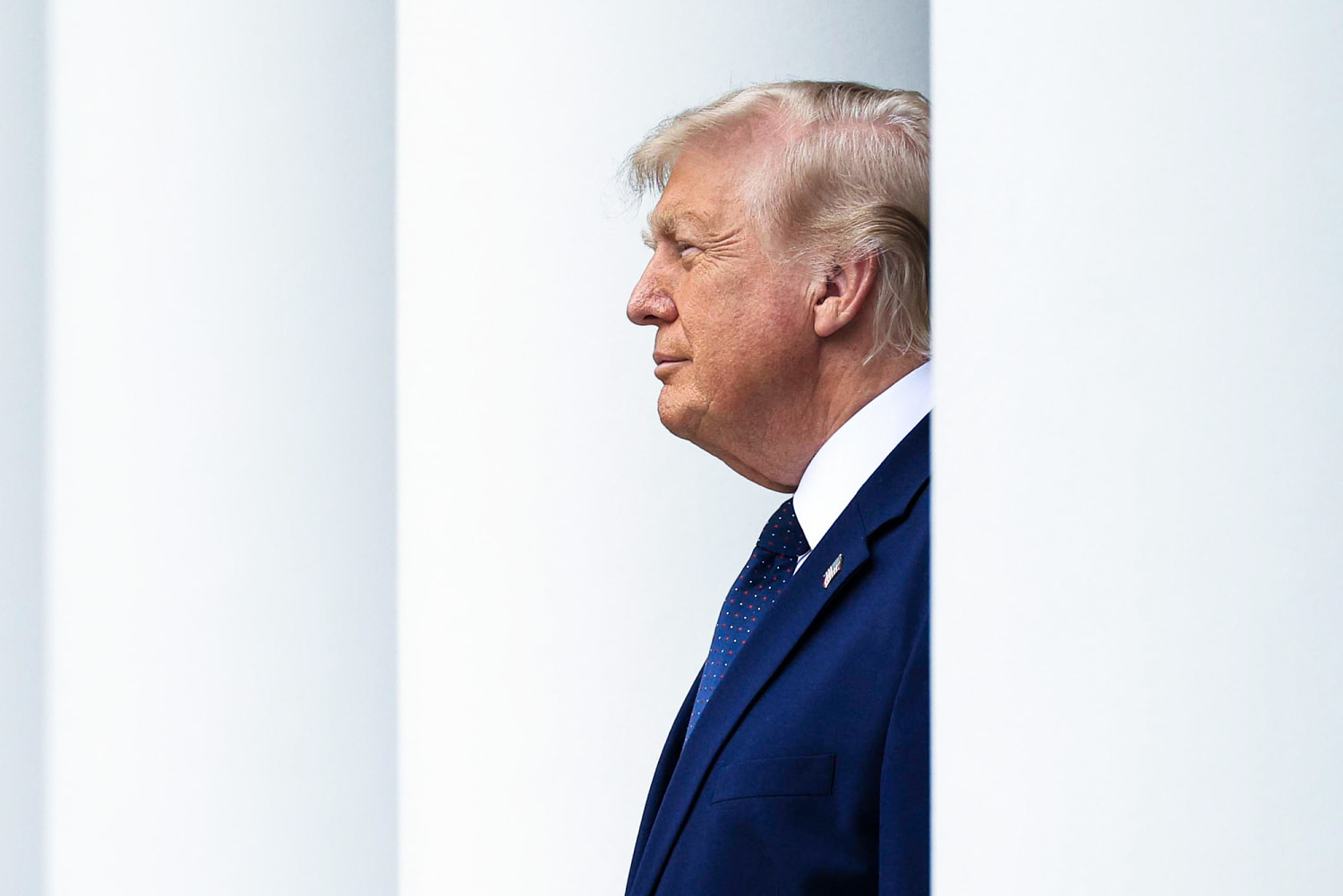
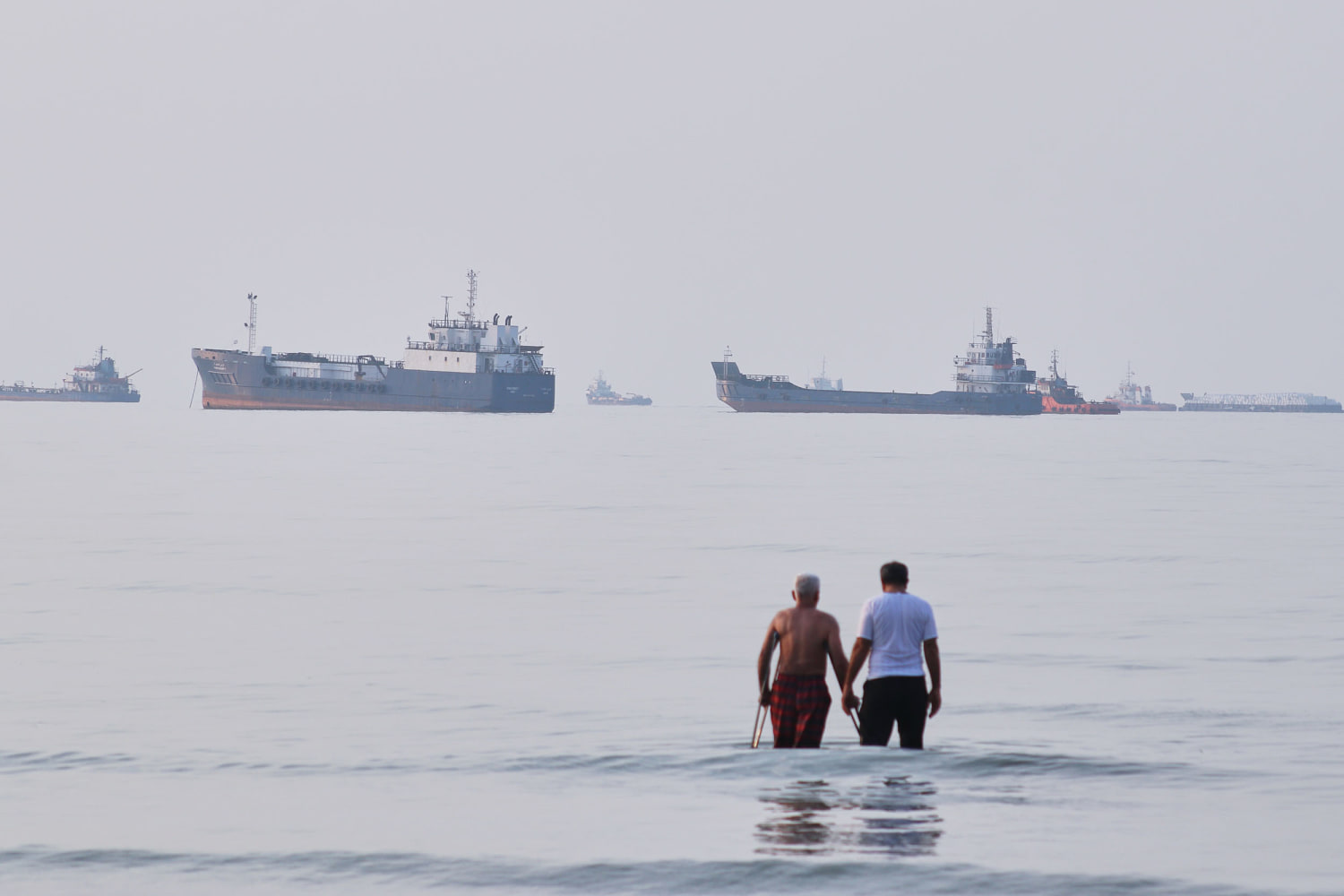
The price of oil jumped more than 9% after President Donald Trump declared on social media Monday that the U.S. would resume its blockade on Iran and be “reimbursed” for helping ships transit the Strait of Hormuz. U.S. crude oil closed higher by 9.4% at $78.14 per barrel, while international Brent crude oil jumped 9.6% to $83.30 per barrel. Both benchmarks are now at their highest prices since June 15 and today marks Brent’s largest single-day jump since since May 2020. The recent increase in oil prices has halted declines in U.S. gasoline prices, as well. Stocks also fell, with the S&P 500 down 0.8% in late afternoon trading. The Nasdaq, which was already sharply lower, hit its lowest level of the day and was down 1.6%. Trump said the reimbursement would be “at the rate of 20% on all cargo shipped.” It was not immediately clear how that would work. Energy and shipping companies have loudly rejected a similar idea from Iran, under which ships would pay a toll in order to pass through the critical waterway. The U.S. Treasury Department has warned that anyone who pays Iran for passage through the Strait of Hormuz would expose themselves to sanctions violations, calling it “maritime extortion.” Hours after Trump’s announcement, the International Maritime Organization rejected Trump’s idea. “We have always been consistent on our stance on fees — IMO stands firmly against charging fees for passage through straits used for international navigation,” IMO Secretary-General Arsenio Dominguez said in a statement. “There is no legal basis through which to introduce mandatory tolls simply to transit through a strait.” However, Iran Foreign Minister Abbas Araghchi said: “POTUS is absolutely right.” He wrote in a post on X that 20% is “too much” and that Iran, which he said would “FOREVER” be the guardian of the Strait would be fairer. The president also said that the U.S. would reimpose what he called “THE IRANIAN BLOCKADE.” In a statement, U.S. Central Command said the blockade would start at at 4 p.m. ET on Tuesday, “against vessels transiting to or from Iranian ports and coastal areas. against vessels transiting to or from Iranian ports and coastal areas.” “The U.S. military continues to support traffic flow through regional waters for all vessels not violating the blockade,” the statement continued. The latest escalation by Trump comes after the U.S. continued to strike targets in Iran as retaliation for the Iranian military’s hitting multiple commercial vessels, including on Sunday night, with projectiles and drones. It could also further frustrate traffic in the Strait of Hormuz, a critical waterway where previously 20% of the world’s energy supplies passed to reach global markets. Even before Trump’s Monday announcement, traffic in the strait plunged 52% week-over-week, according to data from MarineTraffic by Kpler. The marine research firm said 19 ships transited the strait on Friday, rising to 24 on Saturday, before falling again to 14 on Sunday. The firm added that “renewed US-Iran tensions and recent IRGC warnings continue to weigh on confidence” of shippers and mariners. “The latest developments reinforce why much of the marine insurance market remained cautious despite the [U.S.-Iran memorandum of understanding],” said Ben Stone, head of marine hull insurance at Aon. “There was broad recognition that a sustained period of stability would be needed before underwriters materially changed their views on risk and pricing.” Stone said “the key question is if commercial traffic can continue moving through the Strait of Hormuz safely for a sustained period. That’s what shipowners, operators and insurers will be watching most closely in the days ahead.” Asked in May by Bloomberg whether Chevron would pay a fee to the Iranians to get its ships out of the region, CEO Mike Wirth bluntly said, “No, we wouldn’t.” “Freedom of navigation through international waterways is a very well-established principle,” Wirth added. He warned that a toll or fee in the Strait of Hormuz could set a bad precedent that would ripple around the world. “Anything like this would begin to say that countries adjacent to an international waterway can charge some sort of a transit fee,” he said, referring to other places in the world, such as the Strait of Malacca in southern Asia.
NBC News
Oil surges more than 9% after Trump reimposes Iran blockade
· 7 hours ago
The price of oil jumped more than 9% after President Donald Trump declared on social media Monday that the U.S. would resume its blockade on Iran and be “reimbursed” for helping ships transit the Strait of Hormuz. U.S. crude oil closed higher by 9.4% at $78.14 per barrel, while international Brent c...
Source: NBC News
Read full story on NBC News