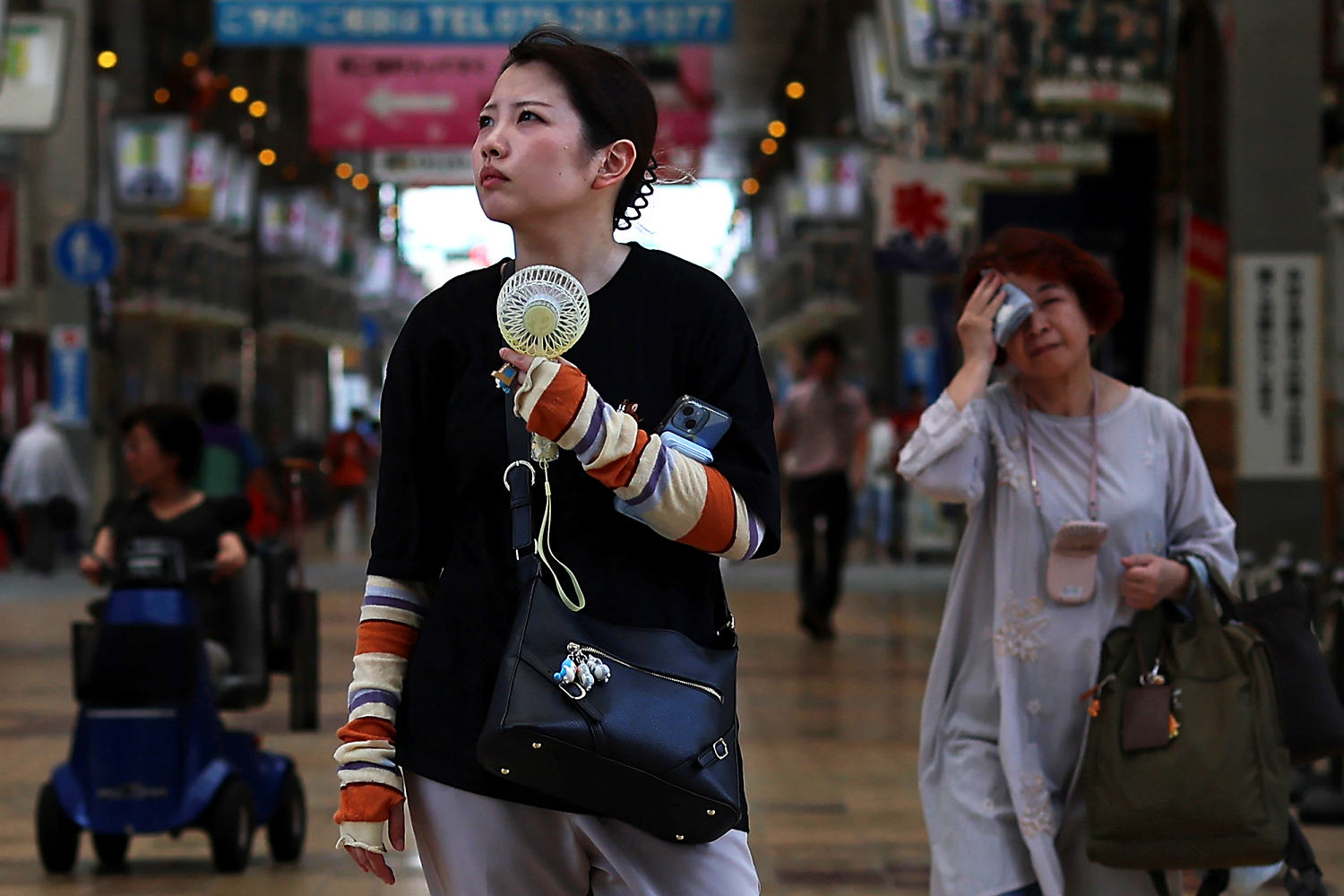
A deadly heat wave is gripping large parts of East Asia, bringing the hottest temperature on record in South Korea and complicating earthquake recovery efforts in Japan. Extreme heat has been linked to 19 deaths in South Korea since mid-May, with President Lee Jae Myung calling it a national disaster on Tuesday. “We need to make efforts for a fundamental overhaul of the national crisis system, since this extreme weather is becoming normal,” he said at a cabinet meeting. On Sunday, temperatures hit 42.5 degrees Celsius (108 Fahrenheit) in the southeastern city of Yangsan, the highest in 122 years of record-keeping. While the abnormally high temperatures have mostly been concentrated in the south, in recent days they have spread north toward the capital, Seoul. For the first time on Tuesday, the Korea Meteorological Administration issued its new “severe” heat wave warning for all of Seoul after issuing it for parts of the city on Monday. The warning is issued when the maximum perceived temperature is at least 38 degrees Celsius (100.4 F). Residents of the Seoul metropolitan area, which is home to more than 26 million people, were advised to stay indoors, keep hydrated and check on vulnerable groups. Temperatures are also soaring in North Korea, where the state newspaper Rodong Sinmun urged residents to avoid outdoor activities and farmers to protect their produce from the high heat, according to Yonhap. Intense heat has also complicated disaster relief measures in Japan, where temperatures have exceeded 100 degrees Fahrenheit since a 7.1-magnitude earthquake struck Kumamoto prefecture on the southern main island of Kyushu on July 28. More than 40,000 households are still without water, according to Japanese public broadcaster NHK, and thousands of people remain at emergency shelters while others are sleeping in their cars for fear of further powerful tremors. Officials said Sunday that a woman in her 70s was found dead last week of apparent heat stroke while taking shelter in her car after the quake, bringing the total death toll to 38. Calling the woman’s death “heartbreaking,” Kumamoto Gov. Takashi Kimura urged those who had been displaced from their homes to keep the air-conditioning running in their cars or move to air-conditioned evacuation centers. During a meeting Monday with Prime Minister Sanae Takaichi, he said residents’ lives had been made even more difficult by the “abnormal heat” and asked for greater government support to improve conditions at the shelters, many of which lack air-conditioning and clean water. Takaichi said the government was ensuring a “continuous supply” of water to evacuation centers, welfare and medical facilities. “We will continue to work swiftly and thoroughly to restore services including the repair of equipment in individual households,” she said while visiting an evacuation center in the town of Hikawa. Elsewhere in Japan, officials at the Tama Zoological Park outside Tokyo said Monday that three lions had died in less than a week from suspected heat-related causes. Officials said 10 of the zoo’s 16 lions had shown signs of distress starting in mid-July, including decreased activity and loss of appetite, with some losing consciousness or the ability to stand. Despite efforts to cool their body temperatures, three female lions between the ages of 3 and 15 died within a week, officials said, the latest on Sunday. Preliminary investigations found dehydration and multiple organ failure in all three lions. While four of the zoo’s lions are in the process of recovery, three others remain sick, according to officials, who said the animals’ health was their first priority and that they had been suspended from public display. In an effort to promote awareness of the dangers of extreme heat, this year the Japan Meteorological Agency adopted a new name, kokushobi — or “cruelly hot day” — to describe days with temperatures over 40 degrees Celsius (104 F) after it received more than 200,000 votes in a public poll. The first kokushobi were recorded last month on five consecutive days. The highest temperature ever recorded in Japan was last August in the city of Isesaki, at 41.8 degrees Celsius (107.2 F).
NBC News
East Asia is baking in ‘cruelly hot’ summer
· 12 hours ago
A deadly heat wave is gripping large parts of East Asia, bringing the hottest temperature on record in South Korea and complicating earthquake recovery efforts in Japan. Extreme heat has been linked to 19 deaths in South Korea since mid-May, with President Lee Jae Myung calling it a national disaste...
Source: NBC News
Read full story on NBC News