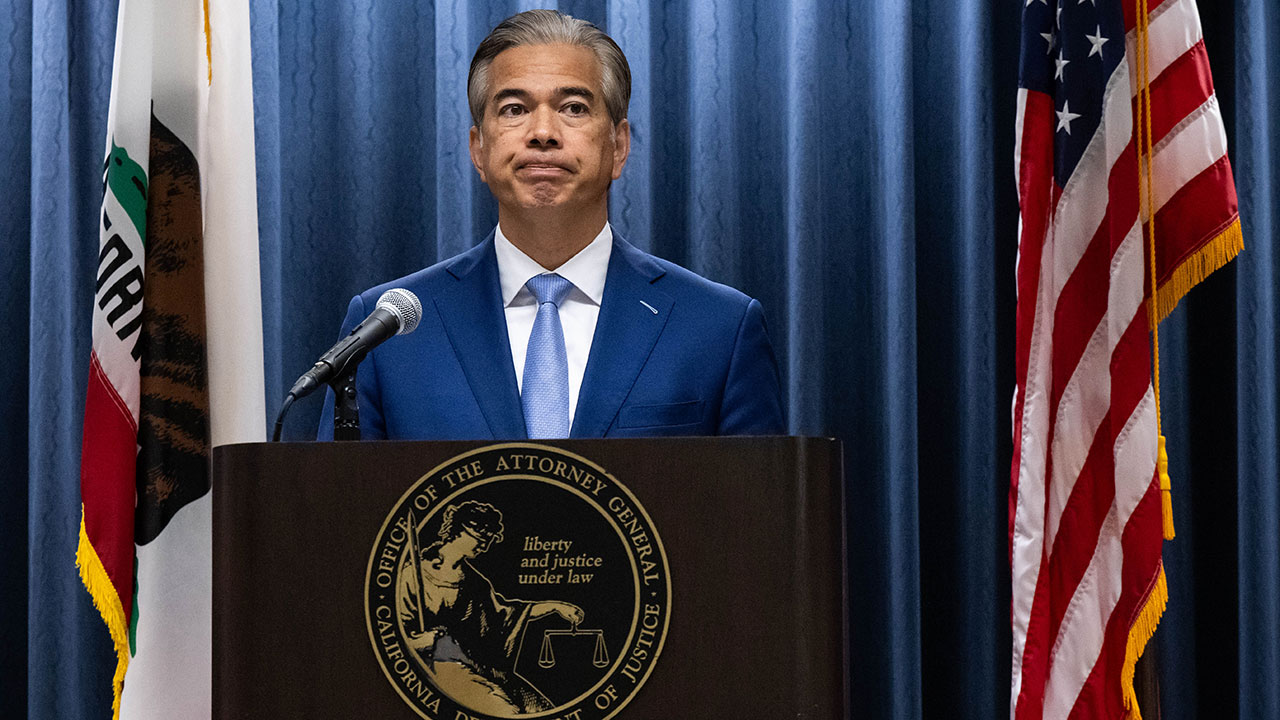
California Attorney General Rob Bonta believes Paramount’s planned takeover of Warner Bros. Discovery (WBD) is simply "an illegal merger," as he appears to be on a crusade to prevent it from happening.
Paramount CEO David Ellison is seeking to acquire WBD in a $111 billion deal expected to close during the third quarter of this year. But the mega-merger has irked critics who fear combining two major Hollywood studios would hurt the industry while giving too much power to Ellison’s Paramount.
Bonta on Monday led a group of 12 state attorneys general in filing a lawsuit challenging the merger, claiming it would "lead to higher prices, lower quality, and less content for film and television, harming movie theaters, basic cable distributors, and ultimately, audiences on every sofa and movie theater seat in the U.S."
PARAMOUNT ADVISERS PUSH FOR CALIFORNIA EXIT AS STATE SUES TO BLOCK WARNER BROS DISCOVERY MERGER: REPORT
The lawsuit, filed in the U.S. District for the Northern District of California, claims that the merger violates Section 7 of the Clayton Act, which holds that mergers that may substantially lessen competition or tend to create a monopoly are illegal.
"We determined that law was being broken with respect to three markets, when it comes to wide-release theatrical films, their distribution, the distribution of top-grossing films, blockbusters if you will, and also with respect to the licensing of cable channels to cable distributors," Bonta said on Matthew Belloni’s "The Town" podcast.
"It’s our duty to analyze the different markets and make a decision based on each about whether antitrust law is violated or not," he continued.
Bonta said he feels there is a very "strong case" in the three markets defined in the lawsuit. He said consolidation in those areas gives a small number of people too much power when it comes to dictating terms to movie theaters and cable providers, which could drive up prices while reducing quality.
CHRISTIANE AMANPOUR POINTS TO 'HEMORRHAGING' AT CBS TO WARN OF DAVID ELLISON'S POTENTIAL TAKEOVER AT CNN
"This is about affordability, and this is about everyday people’s ability to enjoy and experience some of the joys of life, a movie, a TV series, at home, through cable or satellite… at a movie theater for a night out. This merger will make that experience, the quality, less, and make it eroded, and it will make the price higher," Bonta said.
Belloni asked why streaming giants that also produce movies and television shows, such as Netflix, Apple and Amazon weren’t mentioned in the lawsuit, as Paramount has suggested the merger would put the company in a better position to compete with streaming giants. Belloni noted that 48 percent of viewing in America occurred on streaming services last month, compared to 22 percent for cable channels.
"We looked at all the impacts … and the streaming market is different, and the cable market is different than the theatrical release market, and each one has its own independent analysis and where we landed was three clean markets where the impact of the merger is presumptively illegal based on a clear threshold that the law has defined," Bonta said.
Paramount stated in a Monday press release that the "practical effect of this lawsuit is to shield those dominant streaming platforms like Netflix and technology companies from much-needed competition while preventing the significant benefits this transaction will deliver for consumers, creators, workers, and the broader Hollywood economy."
After Belloni read the statement aloud, Bonta said it was "painful to hear," and dismissed the notion that Paramount is "helping" consumers or workers.
"It’s self-serving, and it’s just not true," Bonta said, adding that he will not allow a company to do "illegal things" from an antitrust perspective just to compete with streaming giants.
PARAMOUNT, SKYDANCE COMPLETE $8 BILLION MERGER AS FCC CONTINUES CBS PROBE
Bonta was then asked about a Semafor report that Ellison could potentially move Paramount of California if the state continues to hold up the merger.
"To threaten a state that is simply doing its job in enforcing the law here, it felt like a somewhat desperate, last-ditch effort to blackmail the states into allowing an illegal merger to go through. And that’s just not going to happen," Bonta said.
Paramount fired back shortly after the complaint was filed, saying the lawsuit "reflects a fundamentally flawed application of the antitrust laws and is wrong on both the facts and the law."
"We will vigorously defend the transaction and demonstrate that this challenge is inconsistent with sound competition policy and the competitive realities of the media marketplace. Delaying this transaction will only harm entertainment workers who have already suffered over recent years as technology has disrupted their livelihood and cost California tens of thousands of entertainment jobs," a Paramount spokesperson said in a statement to Fox News Digital.
"The combination of Paramount and WBD will create a stronger, well-capitalized, creative-first media company that is better positioned to compete with companies like Netflix that have come to dominate the industry for audiences, premium content, and creative talent," the spokesperson continued. "Put simply, any attempt to block this transaction undermines the very principles antitrust law is designed to promote: more competition, more choice for consumers, and more opportunities for creators and workers."
The Paramount spokesperson said the company will "continue to fight against any attempt to derail" the historic deal.
READ MORE FROM FOX BUSINESS
Ellison, the son of billionaire Oracle co-founder Larry Ellison, took control of Paramount last year when Skydance Media and Paramount Global completed an $8 billion merger. Adding WBD to his portfolio would make the younger Ellison one of Hollywood’s most powerful people.
The Justice Department (DOJ) on Friday announced it has closed its antitrust investigation into Paramount Skydance's proposed acquisition of WBD, concluding the transaction is not likely to harm competition or American consumers. However, state attorneys general retain independent authority under antitrust laws, and the DOJ's decision does not itself prevent additional legal challenges to the proposed transaction.